The Irish word for September is Meán Fómhair, and it means the middle of the harvest. October is Deireadh Fómhair, the end of it. That calendar was overwritten twice, first by Rome and then by the Gregorian revision, and the language held onto its own accounting straight through both. September stayed the middle.
Which puts the equinox somewhere other than where we have been told to put it. The autumn that supposedly begins on Tuesday has been underway since the nights shifted at the beginning of August, and anyone who works outside here already knows that, because they have been getting up into cold mornings for weeks.
So the equinox works as a measuring point, and the measurement it asks for is narrower than the one we enjoy taking all summer.
The question changes in September
All through the growing season the question is what grew. It is a pleasant question. You walk out with a basket and the answer arrives in your hands.
The question at the middle of the harvest is how much of what grew will still be food in February.
Those are different numbers, and the second one is usually much smaller than people expect, because a tomato on the vine and a jar of tomatoes on a shelf are not the same asset. One of them is a meal this week. The other is a meal in a month when nothing outside is producing.
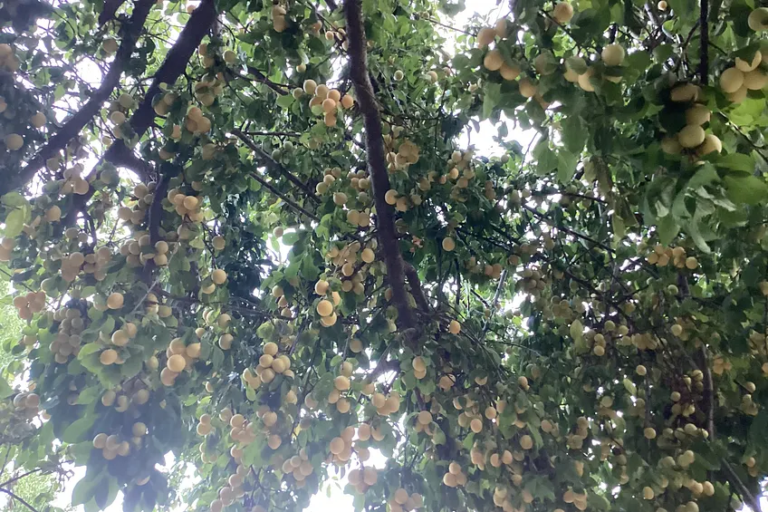
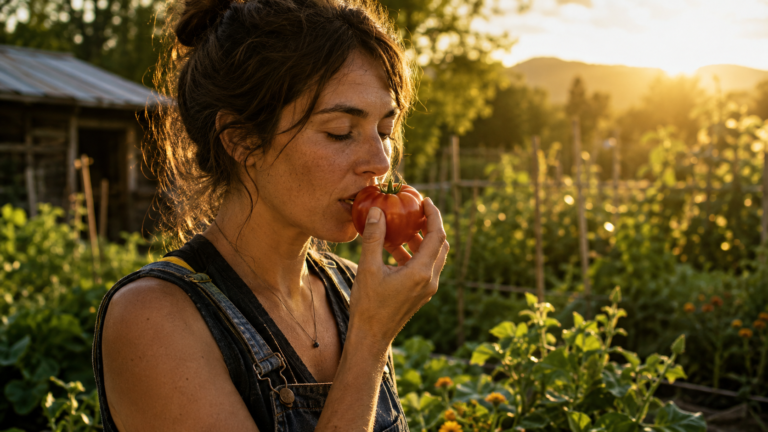
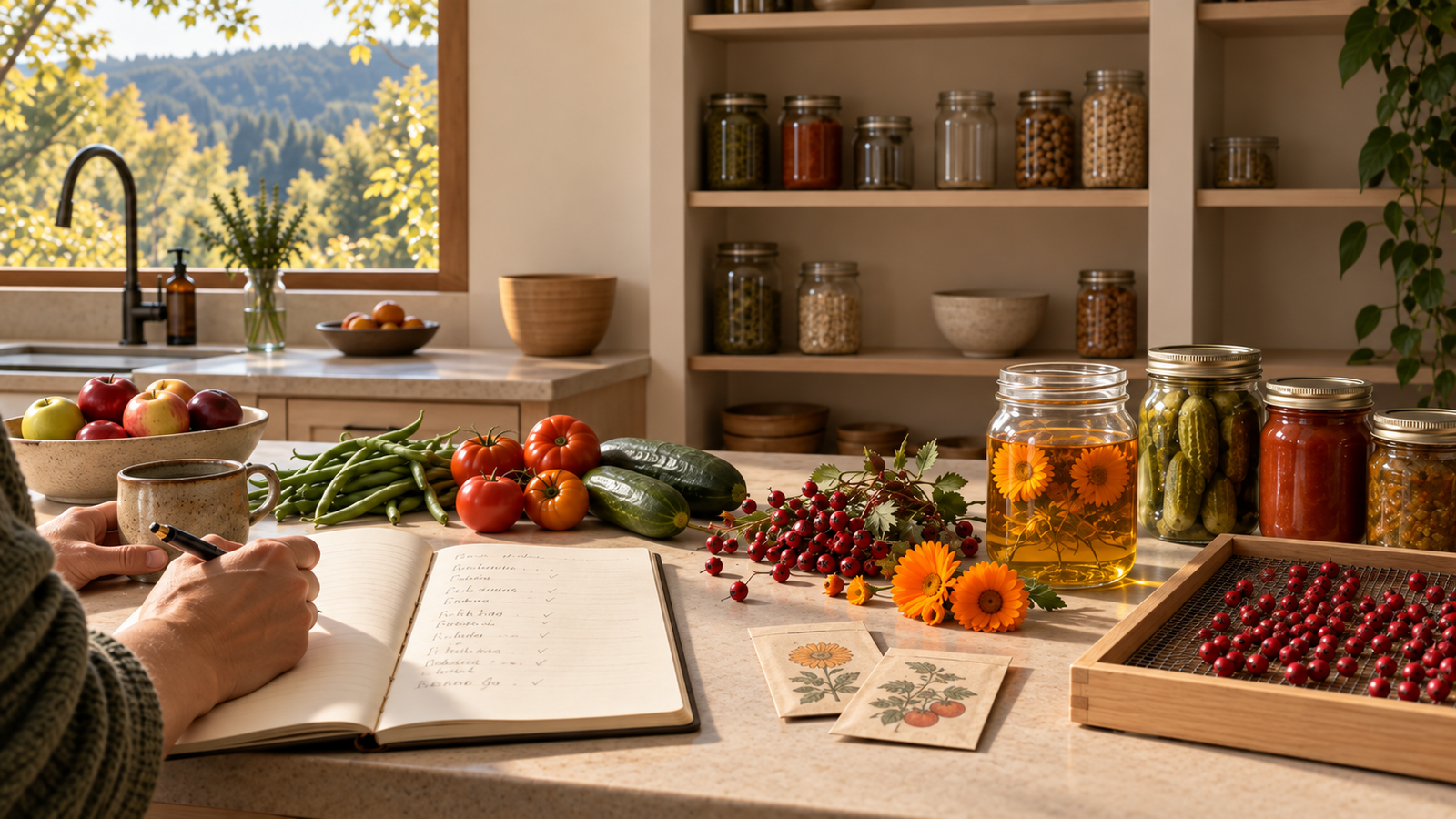
Here, right now, still coming in: beans, tomatoes, cucumbers, zucchini, chard, peppers, calendula, hawthorn berries just turning the deep red that means they are worth picking. Already finished: apples, plums, celery, basil. The basil is sulking now that the nights dropped, the way it always does.
The light is moving fast. Not a slow dimming but a daily shift in where the sun clears the trees, large enough now to change which part of a bed gets a full day. Afternoons still run warm. Mornings have nothing warm in them at all.

Egypt measured the water
The most useful thing I know about this hinge in the year comes from a place that is not harvesting at it.
The Egyptian agricultural year ran in three seasons, and none of them line up with ours. Akhet was the inundation, when the Nile rose and the fields went under and the land could not be worked. Peret followed, and the word means emergence: the water falling away, the ground coming back under it, the seed going down into fresh silt. Shemu was the dry season, when the grain came in, which lands in what we call spring.
At the autumn equinox, then, Egypt was planting rather than gathering. A grower will immediately want to know about latitude, since Cairo sits only about nine degrees south of where I am, which is nowhere near enough to flip a growing season. The river did that. Latitude had almost nothing to do with it.
And this is the part worth carrying: they measured the water. Nilometers, cut into stone along the river, graduated in cubits, read and recorded every single year. The reading set the tax assessment and told the whole country in advance how much grain the year would hold. Surplus, adequacy, or shortfall, known early enough to make arrangements.
A stone instrument, at the hinge of the year, whose entire purpose was to say how large the store was going to be.
The moon is a working tool
The Harvest Moon comes in on Saturday the twenty-sixth, four days after the equinox, and its name records a function rather than a mood.
Around the autumn equinox the moon’s path meets the horizon at a shallower angle, and the practical result is that moonrise arrives only twenty-five to thirty minutes later on successive nights instead of the usual fifty. For several nights in a row there is a bright moon coming up close to sunset. That is extra working light, landing in the exact week the crop has to come off the field, for people who had no other light to work by.
If you have processing to do and the days are running short, that week is the one to use.

The rats already ran the numbers
The rats came back this week.
They arrived the way they always do, all at once, in response to a threshold they can detect that most humans forgot. Some night in the last ten days the temperature crossed a line that told them the outside was no longer viable and the inside was. They compared the two, got their answer, and moved. The fleas will come with them, because fleas travel with rodents everywhere on earth.
The animal in the wall is running the same procedure the Egyptians ran with a staircase cut in cubits. Assess the season, work out what the coming cold will require, and move the store accordingly. That is the same procedure, executed on time, without a calendar, and with no apparent worry about whether it is early.
The difference between us and the rat at this hinge has nothing to do with intelligence. The rat keeps a store and knows where it is.
Taking the count
The reckoning is simple to run and slightly uncomfortable to finish. Walk the shelves and the racks and count only what exists in a form that outlasts the cold:
- Dried. Herbs, hawthorn, peppers, beans left on the vine to harden. Anything that goes to a rack and comes off shelf-stable.
- Fermented. Cabbage, cucumbers, peppers, green tomatoes. The lowest-energy preservation there is, and it asks nothing but salt, a vessel, and a cool corner.
- Rendered or infused. Calendula into oil. Fat, if you have access to it.
- Held dry and dark. Winter squash, alliums, root crops in sand or sawdust.
- Set aside as seed. The oldest move in the book, and the one most likely to get skipped in a busy September.
Count what is genuinely in those five categories. Then count what will not get done, because a reckoning that only tallies successes is a report rather than a reckoning.
This was a leaf-heavy year here, chard and greens rather than a serious store of storage crops. A leaf year extends the season rather than filling a pantry, which is a different sort of resource and worth counting as one instead of mourning as a shortfall. Chard will keep producing well past first frost, when every fruiting plant has stopped. That has value. It just has a different kind of value, and the count is the thing that tells you which kind you are holding.
What comes next
The equinox is Tuesday. The working moon is next Saturday. Both of those are available to anybody willing to take the measure and act on the answer.
The full essay on this ~ the Mesopotamian month named Beginning, the Slavic practice of holding one sheaf back from the mill, and why a year with plenty of food in it can still produce nothing that survives to February ~ is up on Eaborn Living Substack.
And the practical side of it, which is the sequencing question of what to preserve first when time is the scarce resource, is what we are working through inside Eaborn Living Academy this month. If storing is where you are right now, that is where the conversation happens.
✦
~ Marama