There is a moment every gardener in a temperate climate hits sometime around late July, when the harvest tips over into more than you could possibly use. The beds keep producing on their own schedule, indifferent to whether you’ve finished processing yesterday’s haul, and you stand there with your arms full of something abundant, trying to figure out what to do with it. I was talking this through with Shantparv recently, not about gardens at first but about money, and about a phrase that gets thrown around in wellness and abundance circles until it’s lost most of its meaning: poverty consciousness.
The popular version goes like this. If you save, if you delay a purchase, if you think before you spend, you’re operating from lack. You’re clenched. You haven’t done the inner work yet. Spend freely, the logic goes, spend the moment it arrives, and you’ll prove to the universe and to yourself that you trust abundance.
I think this is backwards. Not in a small way. In a large way.
Listen to how people who actually handle money well talk about it, whether they’re extraordinarily wealthy or comfortably middle class and not obsessed with becoming anything more. The consistent pattern isn’t hoarding, though some hoarders certainly exist, and I’ve lived close enough to a few to know what that looks like from the inside of a household. What’s consistent is that they don’t spend the moment money lands. An extra fifty dollars doesn’t become a trinket by reflex. They set it aside. They plan. They think in seasons rather than moments.
I’d call that stewardship, and the word matters, because stewardship carries the sense of holding something in trust that a word like saving doesn’t. Meanwhile the compulsive spending that gets mistaken for abundance, the immediate conversion of every surplus dollar into a purchase, tends to be the scarcity behavior wearing abundance’s clothes. It fills a hole fast enough that you don’t have to feel the hole. It proves to you that you have enough by consuming it on the spot, which is a strange way to demonstrate trust that more will keep arriving.

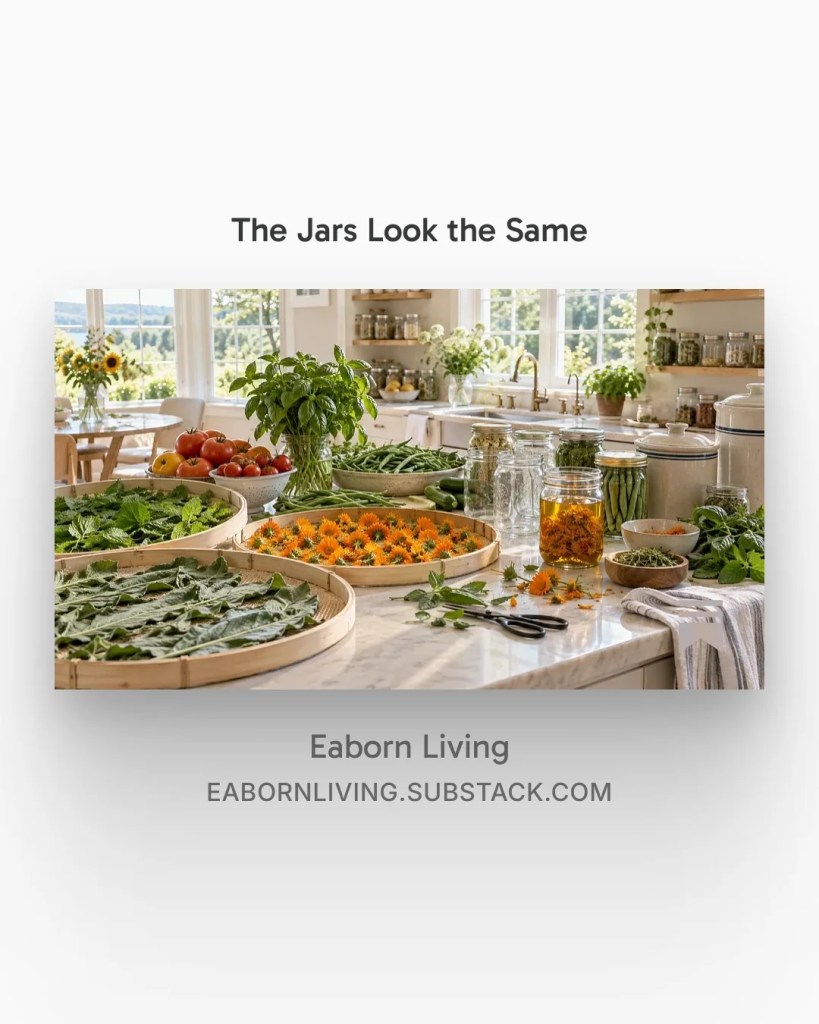
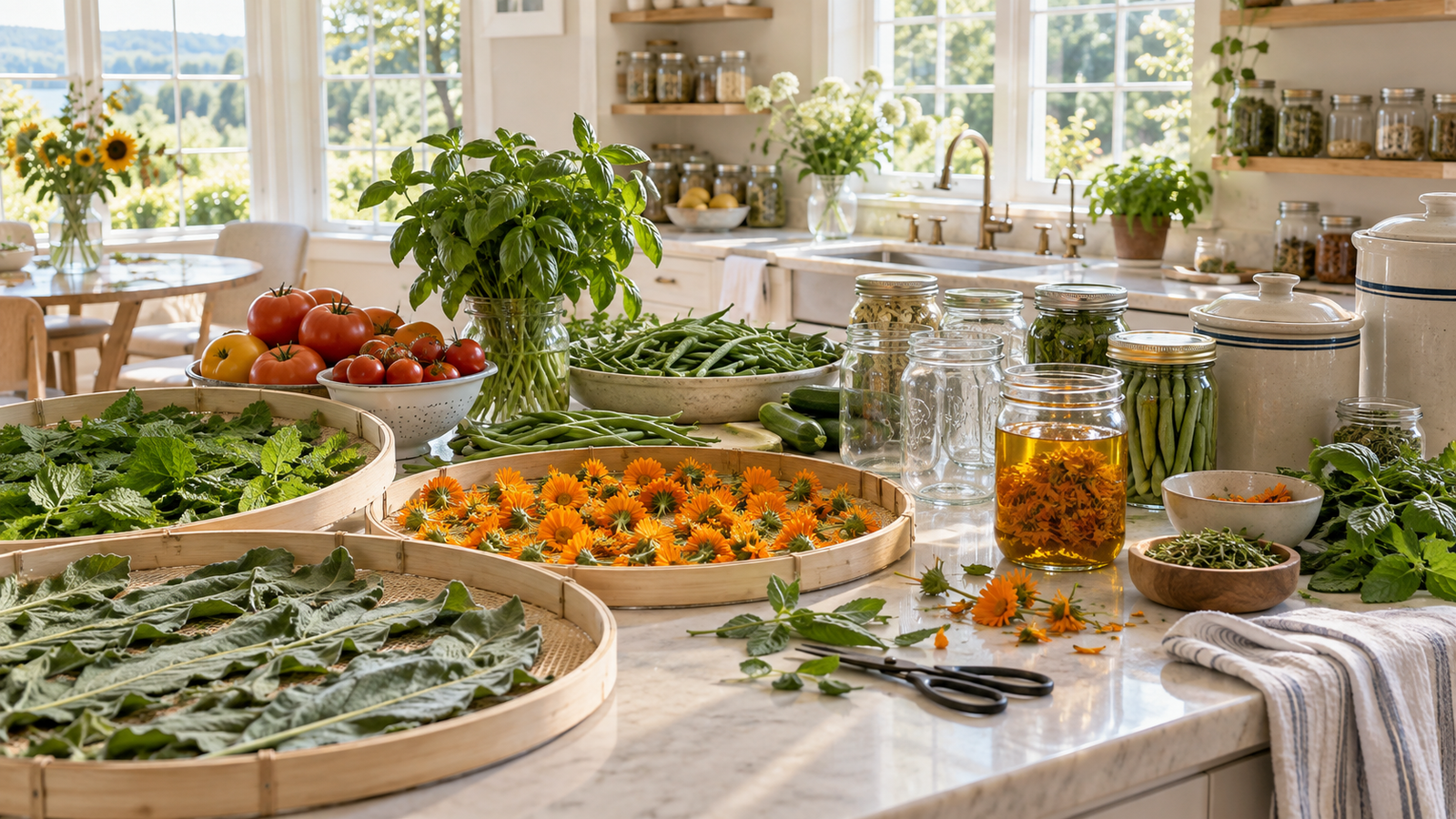
Here’s where the garden earns its place in the argument, because money is abstract enough that people can debate what “enough” means indefinitely, and a garden won’t let you get away with that. It’s July or August. The food and the medicinal herbs are coming in faster than you can use them. What do you do? You put it away for winter. Not out of fear that there won’t be a next harvest, but because you know with total physical certainty that in Winter, unless you happen to live somewhere in the deep tropics, there will be no garden standing in the snow. Preserving the surplus is what accurate perception of a cycle looks like once you’ve lived through enough of them to trust the shape.
Shantparv pushed back on this point when we were talking it through, and it’s worth stating his objection directly rather than just waving it off, because the objection is a real one and most people carry some version of it. Doesn’t putting food away for a lean season sound exactly like scarcity thinking? Isn’t that the fear-based behavior dressed up as prudence?
The test isn’t whether you stored something. Tomatoes rotting on the vine in August while nobody preserves a single jar isn’t abundance, it’s just waste, and nobody watching it happen would call it trust. The test is what’s driving the storing. Putting up jars because Winter has no garden is reading the season correctly. Putting up jars from a clenched fear that there will never be enough again, ever, no matter what, is a different internal event entirely, even though from the outside the two look identical. Same shelf. Same jars. The consciousness behind the hands is where they diverge.

There’s a third state past both of these, and it’s the one Shantparv was actually describing when he talked about money arriving and simply going “over here in the wallet,” no charge on it either way, no scarcity and no performance of abundance either. That’s what happens once the buffer already exists. You stop thinking about the resource in any activated way, because the underlying trust has been tested across enough winters and enough lean months that it doesn’t require re-proving every time something comes in the door. Only from that place, once you and the people depending on you are actually provided for, does surplus become something you can hand outward. Excess apples become apples for the neighbor. Set-aside money becomes the capacity to pay someone for help you can’t manage alone. Sharing from scarcity, or from the scarcity that’s cosplaying as generosity to prove a point to yourself, stays transactional. It’s just aimed outward instead of inward.
So the whole architecture holds three positions, not the two everyone keeps arguing about. Hoarding, which withholds out of fear and helps no one, including the person doing the withholding. Scarcity-spending, which reacts and depletes and gets mistaken for freedom. And stewardship, which takes what actually sustains you, preserves what carries you through the gap, and only after that foundation is solid, lets the rest move.
I don’t have a tidy close for this one. I’m still sitting with where my own hands land on any given week, whether what I’m doing with a surplus, of money or medicine or time, is coming from the trust or from the performance of it. That seems like the more honest question than whichever label gets applied from the outside.
If you like this and want the deeper layers you can find it on Substack