Sow-in, the assembly of the living and the dead, and a calendar you can still read for yourself
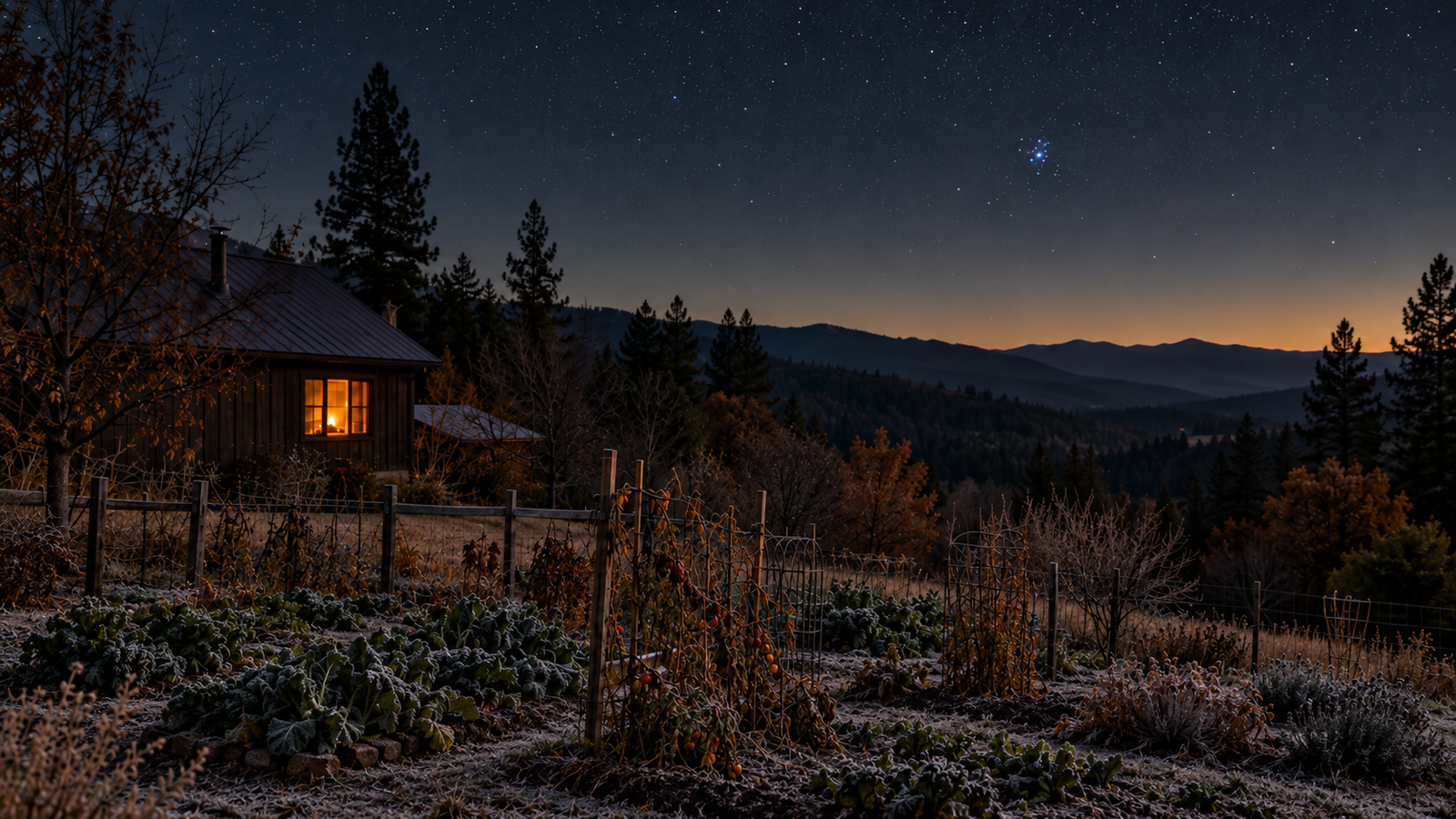
The green tomatoes are soon to be lined up on the windowsill, the ones I pull with the vines when the frost comes close, and the woodstove has gone from a night fire to a day fire. That shift happened somewhere between the new moon and the full moon of October, the way it does every year. I will go stand in the cold and look east over the ridge for a small smudge of light, low and a little blurry, coming up as the sky goes black. That smudge is the Pleiades, and when I see it rising at dusk I will know where we are in the year more surely than any page on the wall can tell me.
This turning has a name, Samhain, said roughly sow-in, rhyming with cow. The spelling is older than the sound; the mh was once a full m that softened over the centuries while the written form stayed put. Manx Gaelic spells it the way it sounds: Sauin.
Who comes to the assembly
The usual translation is summer’s end. In Irish the same word names November, and its first day was the first day of the old Gaelic year, which makes the night we call Halloween the last night of the year.
What I keep turning over is a suggestion from the Celticist Xavier Delamarre, that the Gaulish form of the name may have meant an assembly of the living and the dead. If that’s so, the name was a description of what people actually did on that night. They gathered, and they counted the dead among the gathered.
So I find myself asking who would be at mine. My grandmothers & grandfathers, certainly.
The Celts counted their days from sunset, so Samhain opens in the dark of the last October evening. I like that the old year begins its new count at night, in the cold, with the dead invited in.
Considering
There’s a word I’ve been sitting with this week. Consider comes from the Latin considerare, and one old proposal for its root is sidus, star, so that to consider something was once to look at it the way you look at the stars: patiently, repeatedly, until a pattern shows itself. The dictionaries put a question mark beside that root, and I’m content to leave it there. It describes what I’m doing out on the ridge closely enough.
People did that looking for a very long time before anyone handed them a printed calendar. A thousand years ago, the Pleiades stood at the top of the sky at midnight right around the night of Samhain. Today that moment comes near the twentieth of November, because our calendars were reformed and because the sky itself shifts slowly against the seasons. The festival held its date while the stars walked on. I take that as a small reminder that the sky was the original record, and that it is still up there to be read by anyone willing to go outside.

The same seven stars
Hesiod told Greek farmers to plow when the Pleiades set at dawn in late autumn. In India the cluster is Krittika, and the month of Kartika is named for the full moon that rests beside it this time of year. The Aztecs lit their New Fire, once every fifty-two years, on the November night the cluster crossed overhead at midnight. South of the equator, in Aotearoa and the Andes, the same stars rise before dawn in June and mark the start of the southern winter; the Quechua name for them, Qullqa, means storehouse.
Many of these peoples also tell of seven sisters, one of whom went missing. The astronomer Ray Norris has argued that the story may be old enough to have left Africa with the first modern humans, which is a contested idea and one I hold loosely. Whatever its age, the pattern is plain enough: people with no contact we know of looked up at the same small cluster and decided this is when the year turns, this is when we store, this is when we remember.
That knowledge was never locked away in a temple. It was overhead the whole time. The occult, in its first meaning, is only what is hidden, and a great deal of what feels hidden from us now is hidden by streetlights and indoor evenings. You can take it back on any clear night this month.
A place at the table
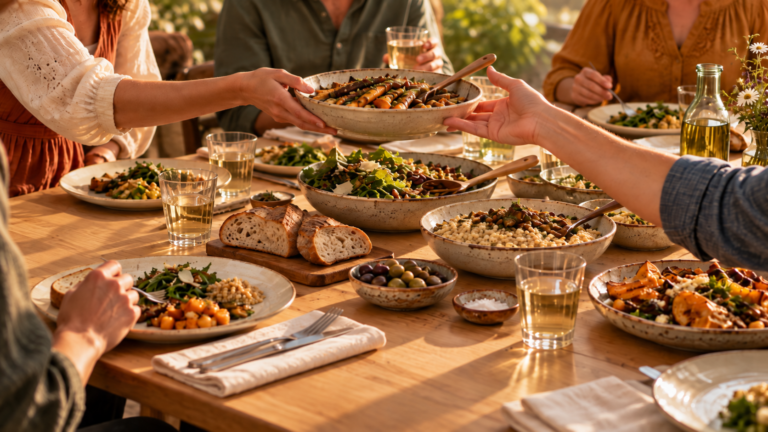
The harvest is in, and for a short while a household holds a little more than it strictly requires. That is when the dead get invited back. In Ireland and Scotland families set a place at the table for them. Slavic households lay out food for the forefathers on the autumn Dziady. The Mexican ofrenda holds photographs and candles beside the foods the dead loved most.
I once heard this festival described from a pulpit as the night of a Celtic Lord of Death, by a preacher telling his congregation it all belonged to Satan. That figure came from Charles Vallancey, a British military surveyor in the 1780s who was fond of grand theories, and he appears nowhere in the medieval Irish texts. The word pagan comes from the Latin paganus, someone who lived out in the countryside. The people who kept Samhain were country people feeding their dead and watching the stars, and I’d rather keep the festival they kept.
If you go out
Go out about an hour after dark and look low in the east-northeast for a small misty cluster shaped like a tiny dipper. Most people count six or seven stars. A bright orange star, Aldebaran, climbs up behind it about an hour later. By midnight the cluster is high in the south, and before dawn it settles in the west. If it smears when you stare at it, look a little to one side and it sharpens. The nights near the new moon are darkest, and a pair of binoculars turns seven stars into dozens.
Take someone with you if you can. Or set the extra plate first and then go out.
Who are you setting a place for this year? I’d like to know. Come tell us in the The Heart Song of Creation community
If you’d like to share this piece, please link to it rather than reposting the full text. Linking helps others find the work in its original context and allows it to continue.
Thank you for reading and sharing with care.