What the Moon, the Layers, and the Old Cities Know That We Forgot
The equinox isn’t just a date. It’s a biological threshold ~ and your garden has been waiting for it.
The Window That Opens Twice a Year
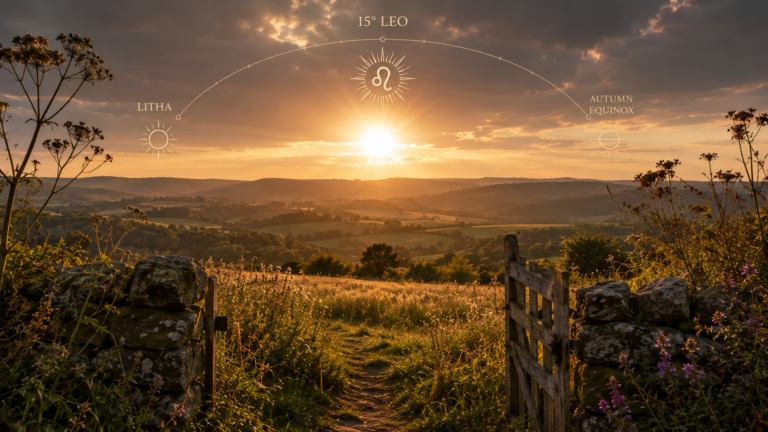
Every year, twice a year, the earth reaches a point of equipoise ~ equal light, equal dark, and a corresponding shift in the living systems that respond to both. The spring equinox in the Northern Hemisphere (around March 20–21) and the autumn equinox in the Southern Hemisphere are the same astronomical event, experienced from opposite orientations.
What permaculture teaches ~ and what traditional land-based cultures knew in their bones ~ is that this threshold is not symbolic. It’s physiological. The days lengthening or shortening triggers hormonal shifts in plants, signals in water tables, changes in root pressure and leaf activity. It’s the land’s version of a biological clock going off.
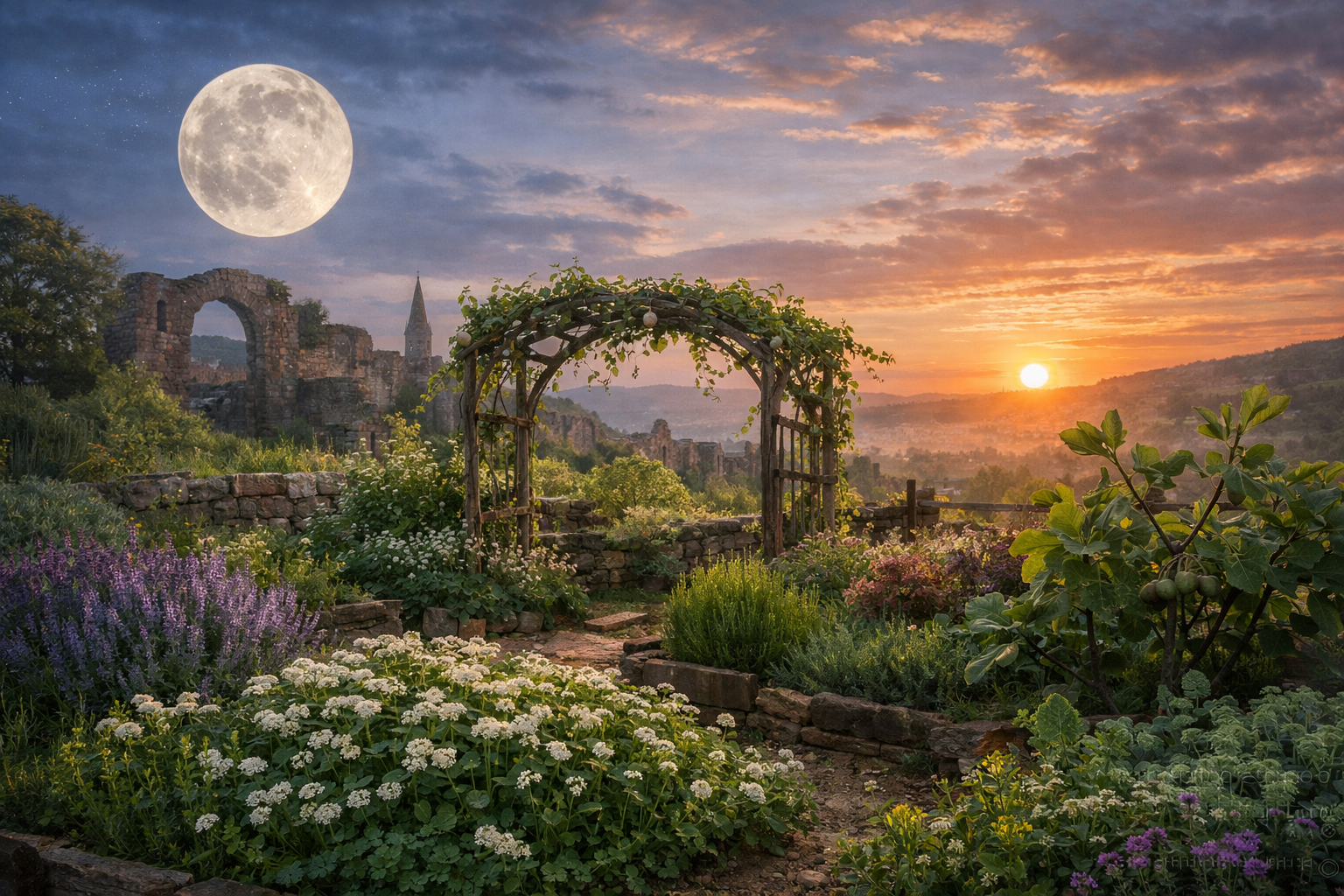
We just moved through a full moon, and we’re approaching a new moon just before the equinox. That alignment matters. The new moon phase pulls moisture upward in the soil column, activating germination and root growth. In practice, it’s one of the most intelligent planting windows available.
Etymology: Getting Clear on What We’re Actually Talking About
Equinox ~ from Latin aequinoctium ~ aequus (equal) + nox (night). Equal night. Not “first day of spring.” A moment of balance between two forces. Our ancestors named it as a threshold, not a beginning.
Permaculture ~ coined by Bill Mollison and David Holmgren from permanent + agriculture, later expanded to permanent + culture. The original word cultura means the act of tending, cultivating, honoring. Permaculture is not a gardening method. It is a permanent way of tending life.
Soil ~ from Latin solum ~ ground, floor, foundation. The same root as sole (of the foot) and solid. Soil is the foundation. Not dirt ~ that’s what you have before the life moves in.

The Seven Layers: A Garden Isn’t Flat
One of the most transformative things permaculture offers is the concept of stacked function and vertical layering. A natural forest doesn’t exist in one plane. It grows in layers ~ and each layer fills a role in the whole living system.
Here is one plant per layer worth putting in the ground right now, whether you’re entering spring in the Northern Hemisphere or autumn in the Southern:
Ground cover ~ White or red clover. Nitrogen-fixer, pollinator magnet, edible, low-maintenance. Goes in now in both hemispheres.
Herbaceous ~ Yarrow (spring/Northern) or garlic (autumn/Southern). Yarrow is a powerhouse for beneficial insects and medicinal use. Garlic planted in autumn winters beautifully and produces reliably.
Low shrub ~ Rosemary or lavender. Aromatic, drought-hardy, long-lived, edible, bird and insect habitat. Hemisphere-adaptable.
Vine ~ Passionfruit (warmer zones) or hops (cooler). Both are fast, productive, and create vertical canopy quickly.
Small tree ~ Fig. Forgiving, productive, adapts to most zones. Autumn-planted figs establish winter root systems that carry them through the following summer heat.
Medium tree ~ Mulberry. Wildlife magnet, prolific, fast. Plant it now ~ let the ground do the root work while the tree is dormant.
Tall canopy ~ Elderberry as a rapid-establishing candidate, and any nut or hardwood tree as a long-horizon investment. The canopy is a 50-year gift to the land.
Any Size of Land Can Do This
What I’ve observed ~ walking neighborhoods here in the Northern CA Sierras and elsewhere ~ is that the most productive gardens are often the smallest. They’re dense, layered, intentional. The story that real food growing requires acreage doesn’t match the evidence on the ground.
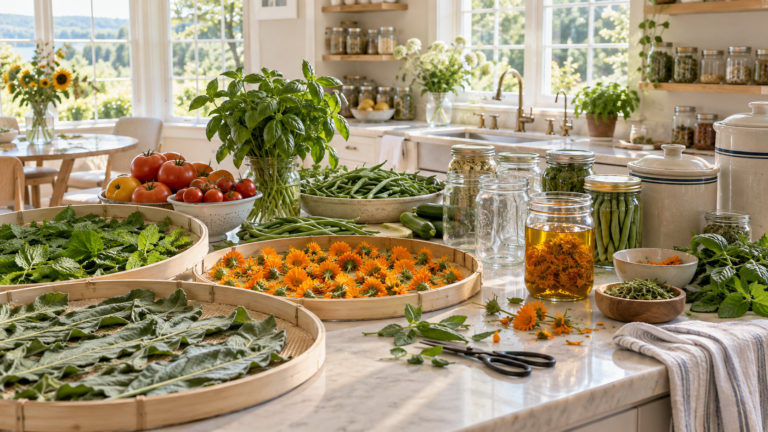
A single city lot, designed with permaculture principles, can produce a meaningful percentage of a family’s vegetables, herbs, fruit, and medicine. A courtyard can host a fig, a rosemary hedge, climbing beans, and a ground cover of clover. A balcony can grow herbs, a dwarf citrus, and a tub of salad greens. A windowsill can sprout seeds.
The scale changes. The principles don’t.

Bed Shape Is Not Decorative ~ It’s Functional
In permaculture design, bed shape directly affects how much you can grow. A curved or keyhole bed ~ rather than a flat rectangle ~ increases the growing edge, which is where the most activity and productivity happen. The design creates more perimeter per square foot.
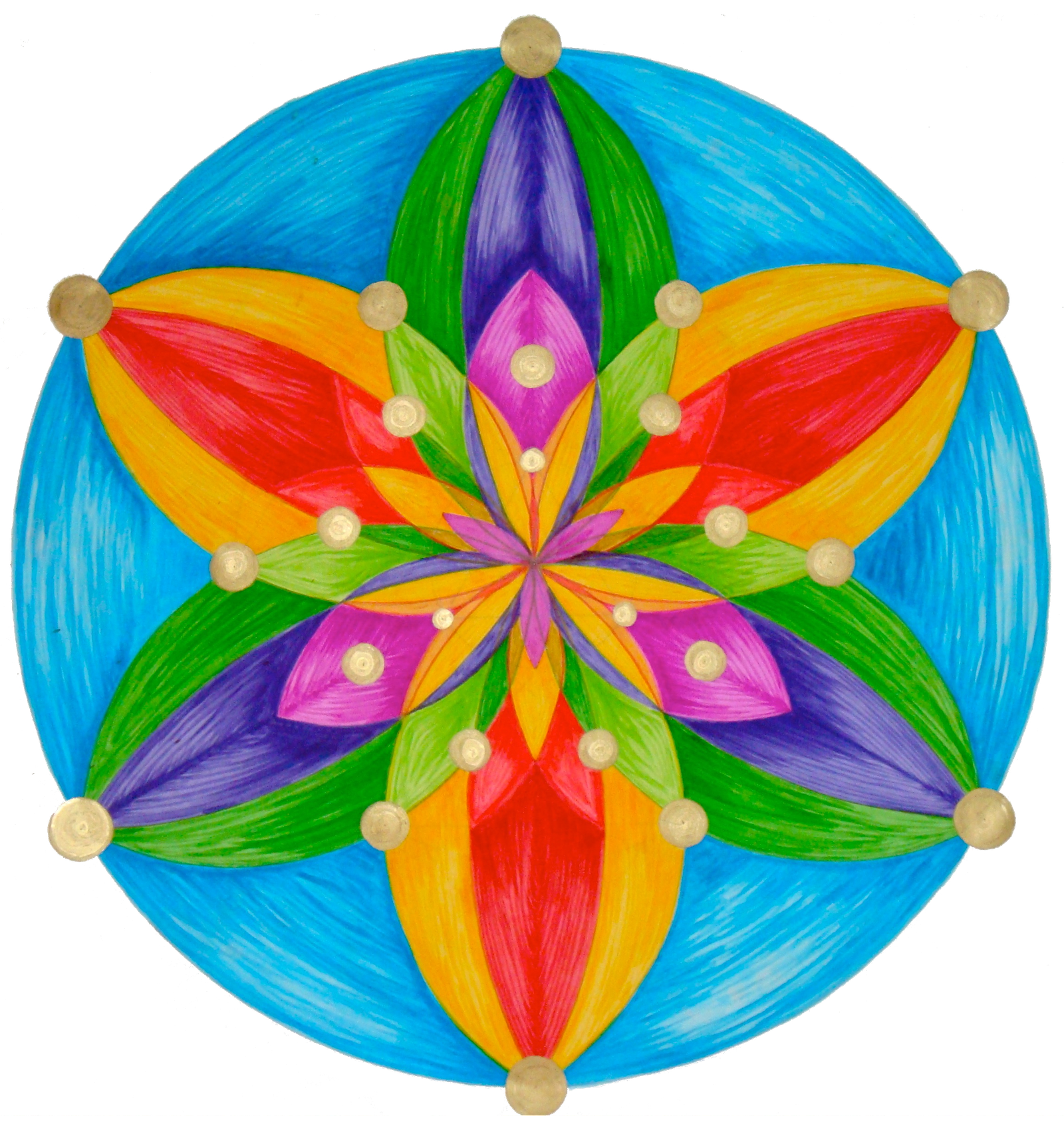
Sacred geometry patterns applied to garden beds (circles, hexagons, mandalas) are not just beautiful ~ they maximize productive edge, create microclimates, and direct water flow. A hexagonal cluster of beds mirrors how bees pack cells ~ maximum use of space, minimum wasted material.
Before You Plant: Getting the Bed Ready
If you’re starting a new bed ~ spring or autumn ~ this is the preparation that makes everything else work: a minimum of 12 inches of quality soil depth, ideally layered with compost, aged wood chips, and if possible, some mycelial inoculant. The fungal network in healthy soil is not an add-on. It’s the communication system the plants actually use.
For Southern Hemisphere readers moving into autumn: this is also the time to begin preparing beds for next spring. Once your autumn planting is in and harvest winds down, start building your new beds now so they’re alive and ready when the season turns.
The Residual Evidence of What Was
Something I keep returning to when I walk through older neighborhoods: the evidence of what once was. Hundred-year-old rose bushes overhanging white picket fences. Elderberry at the edge of many lots. Old fruit trees that nobody planted recently, that nobody tends, that just keep producing.
What I’m proposing isn’t new. It’s a reclamation of something that was ordinary ~ when cities were places where food grew alongside people, where every patch of ground had a function, where abundance was not a specialty item but a neighborhood feature. The residual evidence is still there, if you know how to look for it.
We can build that again ~ one layered bed at a time.
~ ~ ~
Want to go deeper? The full Substack essay includes the complete hemisphere-by-hemisphere planting guide, sacred geometry in garden design, and the ancestral evidence behind the star city framework. Subscribe at NaturWise Living.
Join us in the Skool community to share what you’re planting this equinox season ~ from acreage to windowsill, all scales welcome. NaturWise Living
If you’d like to share this piece, please link to it rather than reposting the full text. Linking helps others find the work in its original context and allows it to continue.
Thank you for reading and sharing with care.
If this work resonates with you, consider supporting it with a donation.
Your support helps keep this work going and accessible.