The Fertility Loop Your Land Is Waiting For
Nothing your land produces is waste. It’s fertility that hasn’t found its place in the loop yet.
That’s the pattern I keep coming back to when I look at how most small-scale land holders in these Sierra foothills are running their systems. One-way flow. Inputs in, outputs out, problems accumulate. But nature doesn’t run lines, it runs circles. And the gap between those two things? That’s where most of the struggle lives.
It’s also where the solutions are.
The Question Beneath the Question
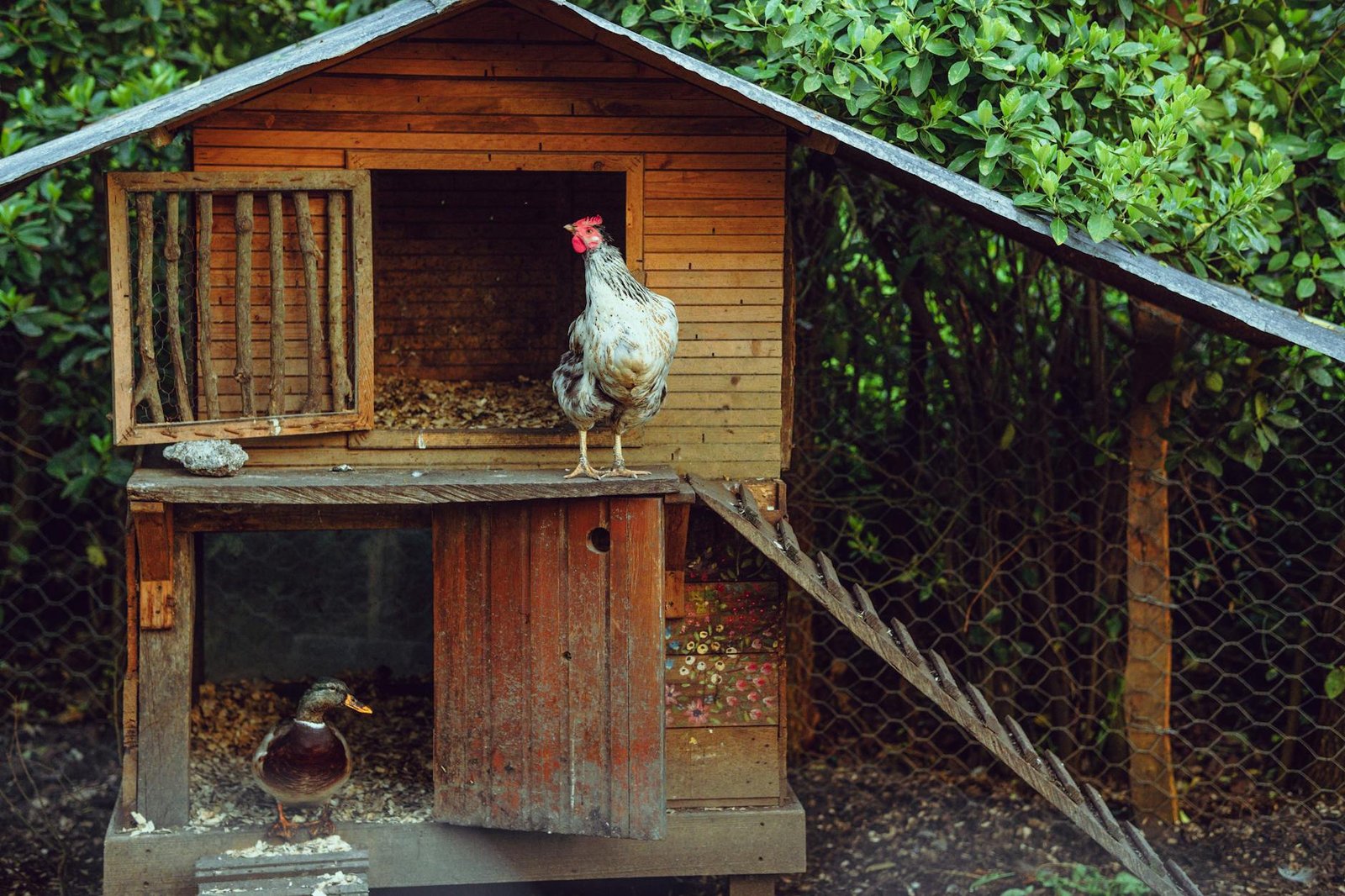
A neighbor asked me recently what to do with all her chicken poop. Great question ~ and not because the answer is complicated. Because the question reveals something most people with backyard chickens or a small flock are sitting right on top of without realizing it.
You’re not managing a waste product. You’re managing one of the most complete and concentrated fertility sources available to a small land holder.
Chicken manure runs higher in nitrogen, phosphorus, and potassium than cattle, horse, or sheep manure ~ not marginally, significantly. And the wood shavings or chip bedding mixed through it? That’s carbon. Carbon paired with nitrogen is the fundamental relationship that drives composting, feeds soil biology, and transforms raw material into something your land can actually use.
Your coop is already running a slow transformation. The biology starts before the material ever leaves the building.
What Our Sierra Soil Is Actually Asking For
Rocky red clay. It bakes hard in summer, runs off in winter, and resists most efforts to work it. If you’ve tried to amend it from below via: tilling, digging, breaking it up ~ you know how that tends to go.
Here’s what I’ve observed in this landscape: red clay is mineral-rich. Iron, calcium, trace minerals ~ it’s not depleted, it’s locked. What it’s missing is the organic layer that unlocks those minerals, holds water between storms, and feeds the biological activity that makes soil alive rather than just inert material you grow things in despite.
Build down from the surface. Not up from below.
A deep mulch layer, at minimum a foot of layered organic material placed directly on the ground, does several things at once. It smothers existing grass and vegetation. It feeds the soil biology from above, the way a forest floor works. And over one to two seasons, it begins to shift the clay beneath it: more friable, darker, biologically active. The worms move in. The fungi extend. The zone transforms.
You’re not fighting your soil. You’re feeding it into becoming something different.

Where the Loop Connects: Fruit Trees
If you have fruit trees growing in grass right now, pay attention to this part.
Grass roots and tree feeder roots occupy the same zone ~ roughly the top six to twelve inches of soil, out to the drip line and beyond. That’s where water moves, where fungal networks build, where most of the biological exchange your tree depends on actually happens. Grass doesn’t coexist neutrally in that zone. It competes.
What I’ve watched consistently, across different lands and conditions: trees growing in grass struggle. Slower growth, reduced fruit set, more stress. Trees growing in mulch thrive. Not as theory. As something that repeats.
A fruit tree’s root system evolved in a forest floor environment: layered decaying organic matter, active fungal networks, carbon above mineral soil. When you mulch out to the drip line with well-bedded coop material, you’re reconstructing that environment. You’re giving the tree back the conditions it’s designed to work with.
No beds required. No major infrastructure. Walk your drip lines. Replace the grass with mulch. That’s the whole move.
March is ideal timing, soil biology is activating and trees are pushing hard into spring. What you apply now integrates with that surge.
Building New Ground: The Deep Mulch Bed
For those wanting to establish new growing beds in Sierra red clay, the same logic applies ~ build down, not up.
The layer sequence:
- Base: thick carbon ~ small branches cut up, wood chips, larger material
- Middle: coop material as your nitrogen and biological activation layer
- Top: thinner carbon ~ straw, dry leaves, fine wood chips
- Optional surface: finished compost or additional topsoil if you want to plant this season
One note on cardboard: I don’t use it in this process. There are chemical concerns with treated and printed cardboard that aren’t worth introducing into a food system. A foot of good layered material handles the suppression on its own.
Give it a season. The structural work happens underneath while you’re doing other things.
What “Ready” Looks Like
If you’re working toward compost rather than direct application, you don’t necessitate a test kit or a checklist. You require four observations:
Dark. Crumbly. Smells like earth, not ammonia. Nothing identifiable remaining.
If it still smells sharp, it wants more carbon and more time. That’s the only diagnostic that actually matters.
The Pattern Beneath the Practical
Seeds get swapped. Trees get planted. Both of those acts are about continuity ~ carrying something living forward. The fertility cycle is the same act at the soil level.
Your chickens, your trees, your beds; they’re already part of the same loop. Most people just haven’t seen the connection yet.
If you want to go deeper into the systems thinking behind soil biology, seasonal rhythms, and building real land sovereignty in practice, that’s exactly what we work through at NaturWise Living ~ both on Substack for long-form exploration and in the Skool community for practical, seasonal skill-building.
If you’d like to share this piece, please link to it rather than reposting the full text. Linking helps others find the work in its original context and allows it to continue.
Thank you for reading and sharing with care.
If this work resonates with you, consider supporting it with a donation.
Your support helps keep this work going and accessible.

Continue the Conversation
NaturWise Living Skool is a free community for those building a natural lifestyle ~ from seed to table ~ through organic living, permaculture, and herbal health, without overwhelm or the requirement to homestead.
It’s a space for learning slowly, asking questions, and reconnecting with seasonal and earth-based ways of living.
→ Join NaturWise Living Skool