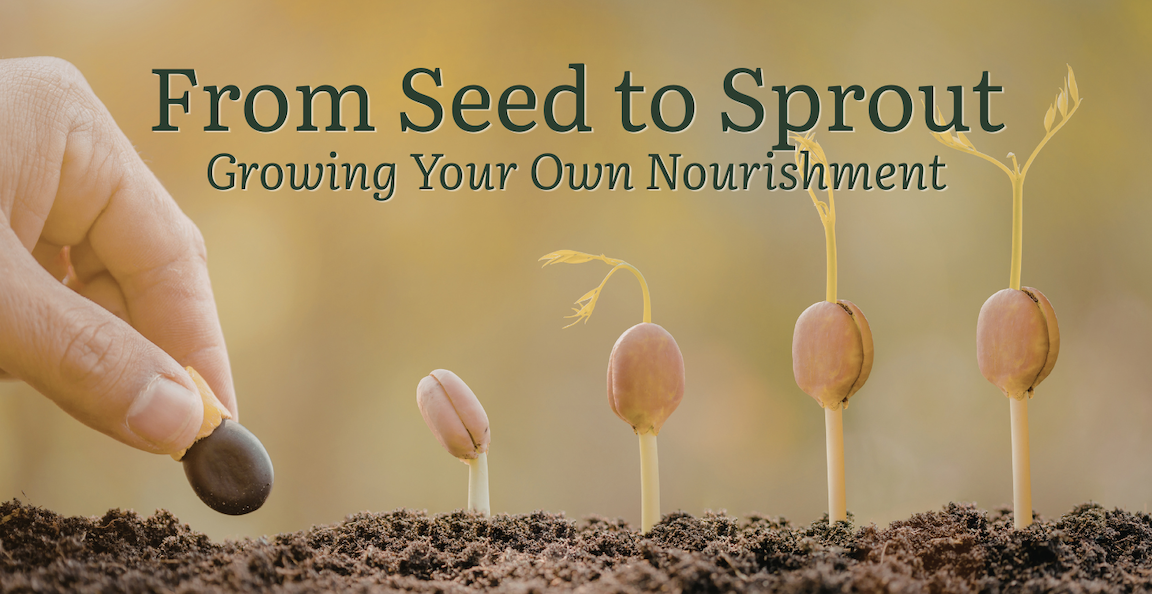
You don’t require a farm. You don’t require a permit. You don’t require anyone’s permission to participate in the most fundamental act of sovereignty there is ~ growing something that feeds you.
But somewhere between the invention of the grocery store and the invention of the wellness industry, a quiet lie took root: that growing food is a specialty skill, something for farmers or hobbyists or people with more land, more time, more knowledge than you have.
It isn’t.
Growing food is what humans do. It’s what we’ve done for thousands years. The knowledge lives in your body whether or not you’ve ever put your hands in soil.
The Permission Problem
I started growing food 30 years ago. Not on a farm. Not with formal training. With one garden bed, a copy of Rodale’s Organic Gardening, and absolutely no idea what I was doing.
I didn’t know how to turn a patch of grass lawn into a garden bed. I didn’t know which plants went in when. I didn’t know what “amend the soil” actually meant in practice. The information gap was real.
But what I’ve observed over three decades is that the information gap isn’t what stops most people. It’s the belief that growing food requires conditions they don’t have. More space. Better soil. A rural setting. Years of experience.
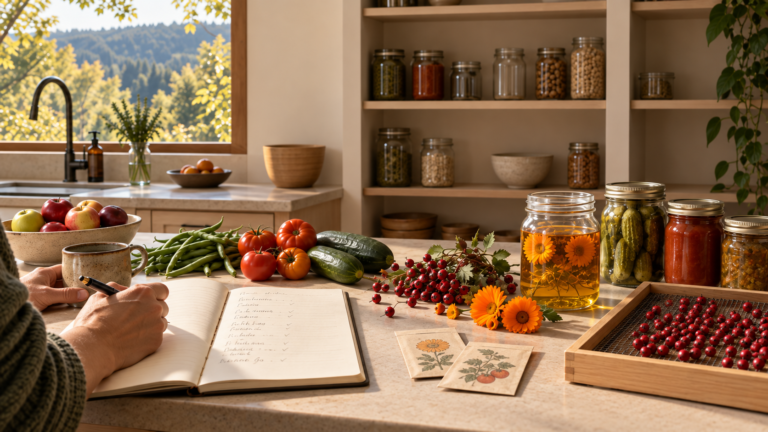
Here’s what’s actually true: if you have a surface that gets four or more hours of light and a container that holds soil, you can grow food. Right now. This week.
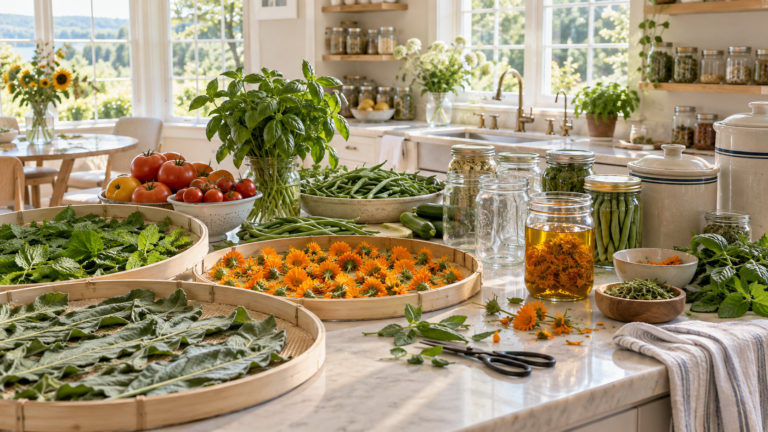
Three tomato plants in a half-barrel on a patio ~ that counts. The lemon balm outside my yurt that reseeds itself with unreasonable confidence ~ that counts. A pot of herbs on a windowsill counts.
The information you can learn. The permission is what you give yourself.
What They Don’t Tell You About Soil
Most gardening guides talk about soil as a medium . Something inert that holds plants upright while you add fertilizer. That’s not soil. That’s dirt.
Soil is a living ecosystem. A teaspoon of healthy garden soil contains more living organisms than there are people on the planet. The nutrient density of what you eat is determined not primarily by what you add to your soil, but by the health of the microbial community living in it.
And here’s the piece most soil conversations skip entirely: glyphosate is detectable in rainwater now. This is not a localized problem. It is falling on your garden whether or not you’ve ever used it. Glyphosate chelates copper, zinc, manganese ~ makes them biologically unavailable even when they’re physically present in your soil.
Your steel garden tools? Also a factor. Iron introduced through consistent tool contact tips the mineral balance over time. Copper tools: trowels, forks, hoes ~ do not have this effect.
This is not minutiae. This is why people do everything right: good compost, no synthetics, careful watering ~ and still grow plants that lack vitality. The biological infrastructure has been systematically dismantled. And most guides don’t mention it.
The Varieties That Matter
When I say “heirloom and open-pollinated varieties,” I’m not talking aesthetics. I’m talking sovereignty.
A hybrid seed produces one generation of plants. You can’t save that seed and grow it again, the genetics don’t hold. The plant is genuinely yours for one season, then you’re back at the seed catalog.
An heirloom or open-pollinated variety? You can save that seed. Grow it year after year. Select for the traits that work in your specific microclimate, your specific soil. After five seasons, you’re growing a landrace ~ a variety that belongs to your place in a way no catalog seed ever could.
Seed sovereignty is food sovereignty. They’re not separate.
What Seed to Sprout Actually Teaches
I just released Layer 3: Seed to Sprout ~ the course I wish had existed when I first started growing food three decades ago. Not a replacement for information, you actually require that, but a structured path through it. What to start with. What actually matters. What you can skip until later. The underlying patterns that make you independent of any single guide.
The course covers:
- How to start where you are (sprouts, microgreens, container gardening ~ all legitimate entry points)
- Soil biology and mineral remineralization (copper, magnesium, the glyphosate problem)
- Heirloom varieties worth growing and why seed saving matters
- Permaculture principles in practice: observe first, design second, plant third
- Companion planting relationships that actually work
- The growing journal as your most valuable gardening resource
It’s not about becoming a farmer. It’s about direct participation. About putting your hands in soil and watching something emerge from it that you can eat.
One plant you grow yourself will teach you more about food than a hundred hours of reading about it.
The Invitation
Join the free Skool community ~ daily skill-building, thoughtful circle, people who are reclaiming practical ancestral intelligence alongside you. No sales pressure. Just competence-building and real conversation.
Seed to Sprout is live for $69 until Saturday, May 16 at 9pm Pacific. After that, it goes to $96. Full curriculum: four complete lessons, growing journal template, heirloom variety recommendations, soil-building protocols, succession planting schedules.
- This is the foundational layer ~ how to start, what soil biology actually requires, which varieties to grow and why, the observation protocols that make you see what a site wants to become.
- The structured path from “I have never done this” to “I have a growing journal, a succession planting schedule, and I know what my soil is asking for.”
- It’s not everything. It’s the ground layer. What comes next builds on this.
Paid Substack is moving to $9/month ~ cultural analysis, solutions behind the paywall, the long-form essays that connect personal sovereignty to systemic patterns. If you’re here for the depth work, that’s where it lives.
Start anywhere. A pot of herbs on a windowsill counts.
The knowledge was never lost. Just buried under a lie that served someone else’s economy.
It’s time to remember what you already know.
~ Marama
NaturWise Living • Northern CA Sierras