Tag seasonal living

The Middle of the Harvest: What Actually Makes It to February
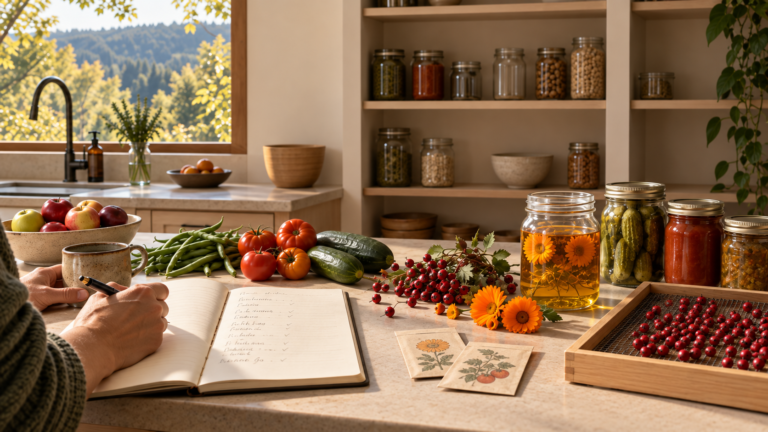
The Irish word for September means the middle of the harvest, and October means its end. The autumn equinox was never a starting gun. It was a measuring point, and the measurement it asks for is narrower than the one we enjoy taking all summer: how much of what grew will still be food in February? Egypt measured its water in cubits. The rats measured theirs this week.
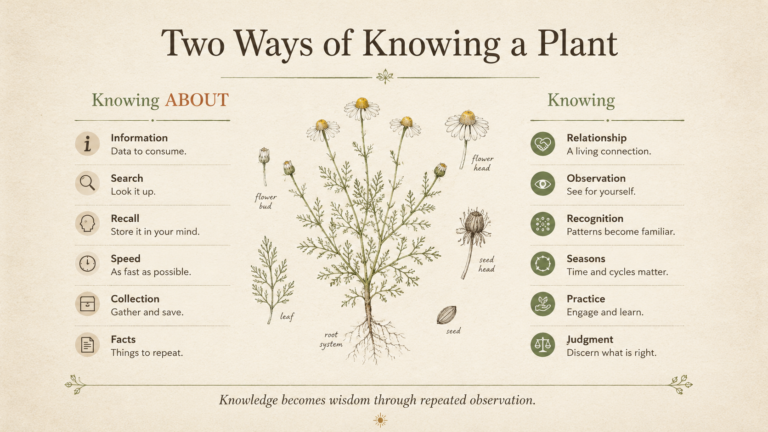
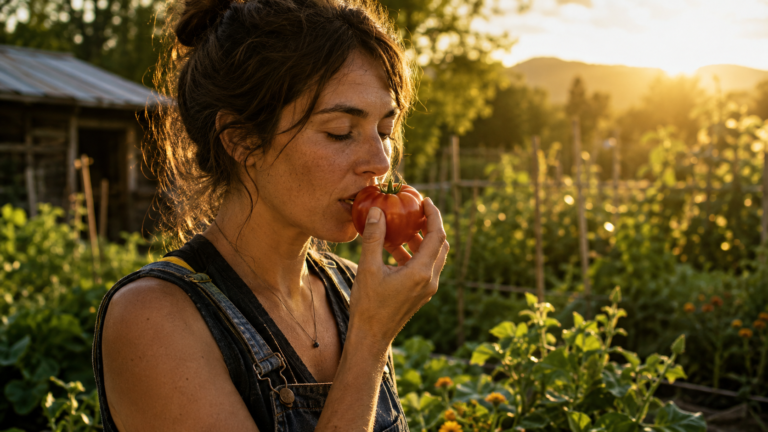
The Difference Between Knowing a Plant and Knowing About a Plant

here's a version of chamomile that lives on the internet ~ fourteen seconds, soft light, a caption calling it nature's Xanax. Everyone walks away knowing something about chamomile. Almost nobody walks away knowing chamomile. That gap between information and real botanical knowledge isn't small, and the culture we live inside profits from keeping it blurry. Here's what actually separates a fact you can repeat from a relationship you can draw on when it counts.

The Shift That Happens When You Grow Your Own Food

Most people think the point of growing food is just the food. It isn't, or not entirely. When you grow something that feeds you, something shifts at a level deeper than nutrition. Your nervous system registers it. Your relationship to food, to sourcing, to seasonal rhythms changes in ways that information alone never produces. This is what participation does that consumption cannot. And it starts with one plant.

The Quickening

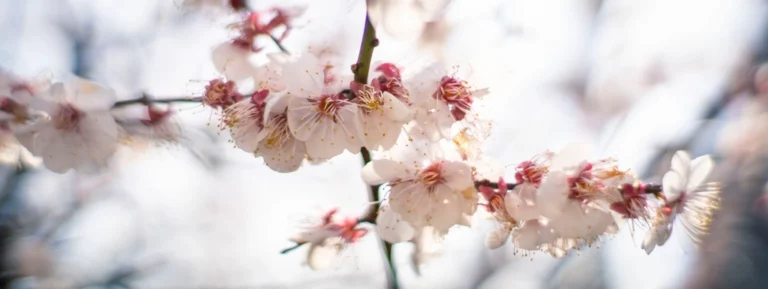
Early spring flowers

We are in the quickening, even if snow still rests on the ground. This week marks the second new moon after Winter Solstice, a threshold long recognized across cultures as the true energetic beginning of the year. While January 1st serves administrative needs, early February aligns with biological reality. Discover why this timing matters for seasonal living, why January resolutions struggle, and how honoring this ancient threshold restores alignment between inner experience and ecological truth.

PART 2: LUNAR TIME AND SACRED CYCLES

full moon in clear night sky with bare tree

Discover why Chinese New Year changes dates annually and how lunisolar calendars in India and East Asia track time through observed celestial cycles rather than fixed dates. Learn why these ancient systems accommodate regional differences and hemispheric realities better than modern calendars. And, how you can reclaim responsive timekeeping in your own life by following the moon and local seasons.